How to Speak With Conviction

Do you want to know how to speak with conviction? You are not alone in that aspiration. Every public speaker wants their listener to hang on every one of their words. That is because the way you present your points in a speech determines how listeners conceive your message. Not only that, but it also predetermines what they do with your message.

Arguments presented with authority and conviction have higher chances of gaining a place of grace in the heart of the listeners.

Continue reading
Pauses in Speech: How to Use it Effectively for Impact

Do you know the power of pauses in a speech?

One of the most useful tools in public speaking is pause. However, few people can do it effectively.

To be understood, speakers need to employ pauses in conversation. Your listener will not notice your pauses, but you will be able to convey your ideas more convincingly and clearly.

If you don’t express yourself well, your audience will have trouble grasping your point of view, and you risk appearing less credible and reliable.

Continue reading

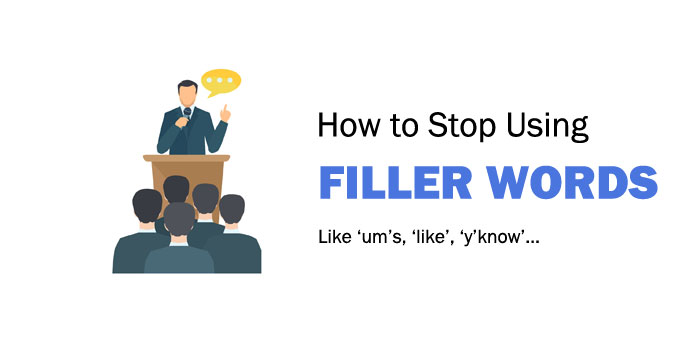
How to Stop Using Filler Words (Such as um, like, y’know)

Do you find yourself saying so, like, right, and um a lot during a formal speech?

In conversation, we often use filler or crutch words that may sound informal or less meaningful. Also, such a way of speaking may sound redundant to the audience, especially during seminars or presentations.

Although, when used occasionally, it might not make a dent in your speech, excessive use of filler words can reduce your ability to communicate fluently. So, you should learn to avoid these words and phrases and speak with greater authority.

Similarly, relying on too many ‘like’ and ‘um’ will interrupt the flow and devalue the points you’re trying to make.

Continue reading

How to Speak With Confidence

Have you ever wondered how a public speaker manages to speak so confidently in front of an audience? Every other person has wondered how to be a better public speaker.

Even though public speaking can be scary, the advantages far surpass any real or imagined worries. While some people may truly just be born confident, the rest of us must hone this skill.

Thankfully, confidence is a skill you can develop. Speaking confidently requires practice, understanding your audience, and maintaining a relaxed body. Believe it or not, there is no rocket science behind it but persistence, hard work, and a positive mindset.

Continue reading

How to Introduce a Speaker: 8 Steps to a Perfect Introduction

Have you ever noticed the energy in the room after a powerful introduction of the speaker?

Knowing how to introduce a speaker can establish a great starting point for the presenter and boost the audience’s enthusiasm for the speaker and the topic. An introduction that lacks passion and is full of cliche biographical details and exaggerations fails to create momentum.

Hence, a presenter must introduce their speaker in the best way possible. It is your responsibility as the host, MC (master of ceremonies), or presenter to establish the speaker’s credibility through a carefully written and skillfully executed introduction.

Fortunately, crafting a well-thought-out introduction isn’t difficult. Furthermore, it gets progressively easier as you flex your presenter skills, and soon, you might be able to roll a smooth introduction off the tip of your tongue. But first, here are some steps to guide you.

Continue reading

How to Propose a Toast to Commemorate and Celebrate

There are occasions when you may be asked to say a few words to commemorate an event or a person. Giving a speech at such an occasion, especially if the mood is festive, would not only be entirely unwelcome and a bore but also not appropriate for the context.

So, what can you do? Give a toast of course!

By definition, proposing a toast involves wishing a person or people future success, happiness and health and asking others to raise their glasses and join in a drink.

Toasts are diverse in that they can be given at retirement parties, awards dinners, weddings, birthdays, thanksgiving ceremonies and engagement parties, among others.

They can be made over festive beverages such as wine, sparkling cider or champagne, as well as any other beverages.

If you are ever called upon to share a few words to add a personal touch to any social gathering, here are a few tips to help you propose a toast that will not only mark the special occasion but also be memorable.

Continue reading

How to Memorize a Speech for a Powerful Delivery

Giving a speech doesn’t sound like a hard task, but this doesn’t mean that it’s a simple undertaking. Did you know that about 75% of the world’s population suffers from the fear of public speaking, which is commonly referred to as glossophobia? If you’re reading this, you probably do too.

So, what’s a smart way to help you handle this fear and deliver a good speech at the same time?
Memorizing your speech!

Memorizing a speech and no, I don’t mean cramming, allows you to give your presentation in a way that makes you feel and seem confident while also connecting with your audience. There’s a catch though, you need to memorize your speech in a way that makes it seem like you didn’t memorize it.

This will ensure that the speech feels and sounds natural as you present it, even though you may have practiced it a few hundred times. Memorizing a speech also prevents you from avoiding eye contact with your audience while you keep looking down at your notes, which makes you seem unprepared and unengaged.

Below, we look at a few steps that could help you memorize and give your speech.

Continue reading